


 Tech
Tech
Muthanga Wildlife Sanctuary, Wayanad: Safari, Timings and Entry Fee
Muthanga Wildlife Sanctuary safari guide: jeep and bus timings, entry fees, best season to visit, wildlife you can expect and the rules inside the forest.
29 August 20268 min read
Muthanga Wildlife Sanctuary at a Glance
Muthanga is the southern ecotourism range of the Wayanad Wildlife Sanctuary, and it is the name most travellers use when they book a wildlife safari in Wayanad. The sanctuary was notified in 1973 and covers 344.44 square kilometres across four hill ranges: Sulthan Bathery, Muthanga, Kurichiat and Tholpetty. Only Muthanga in the south and Tholpetty in the north are opened to visitors; the rest stays closed to general access.
The sanctuary sits inside the Nilgiri Biosphere Reserve and shares boundaries with Bandipur and Nagarhole in Karnataka and Mudumalai in Tamil Nadu. Elephants, tigers and gaur move freely across all four protected areas, so a single morning at Muthanga can produce sightings of animals that were in another state a week earlier. Ecotourism here is run by the local Eco Development Committee under the Kerala Forest Department, and the guides who ride along come from the communities living in and around the forest.
Quick facts
| Detail | Information |
|---|---|
| Notified as a wildlife sanctuary | 1973 |
| Total area | 344.44 sq km |
| Ranges | Sulthan Bathery, Muthanga, Kurichiat, Tholpetty |
| Ranges open to visitors | Muthanga and Tholpetty |
| Larger landscape | Nilgiri Biosphere Reserve |
| Managed by | Kerala Forest Department with the local Eco Development Committee |
| Nearest town | Sulthan Bathery |
| Visitor access | Guided jeep or bus safari only |
Wildlife and Habitat
Forest types and vegetation
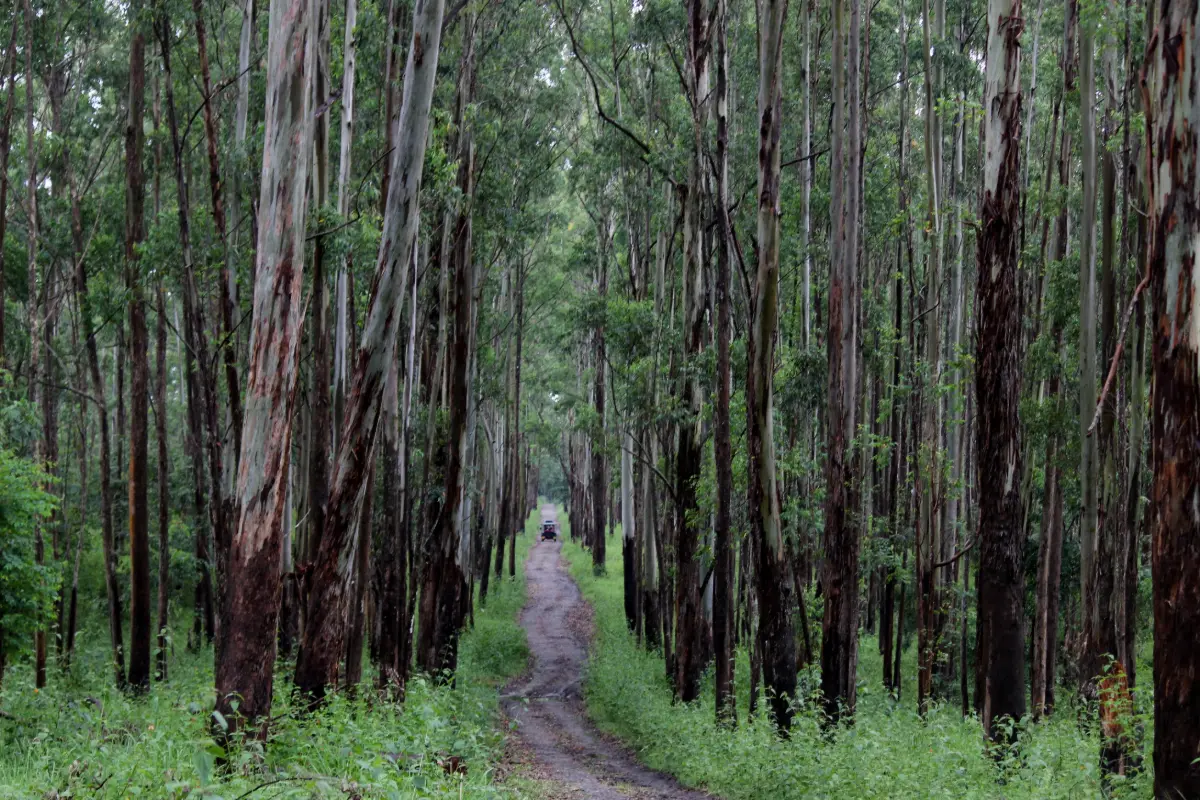
The forest at Muthanga is a mix of South Indian moist deciduous woodland and West Coast semi-evergreen patches, broken up by bamboo brakes and stretches of planted teak and eucalyptus along the tourism zone. Rosewood, laurel, terminalia and crape myrtle are common beside the safari tracks, and the open grassy clearings between them are where most large-mammal sightings happen.
Mammals and birds
Asian elephants, the flagship species here and the reason the sanctuary was brought under Project Elephant in 1991-92.
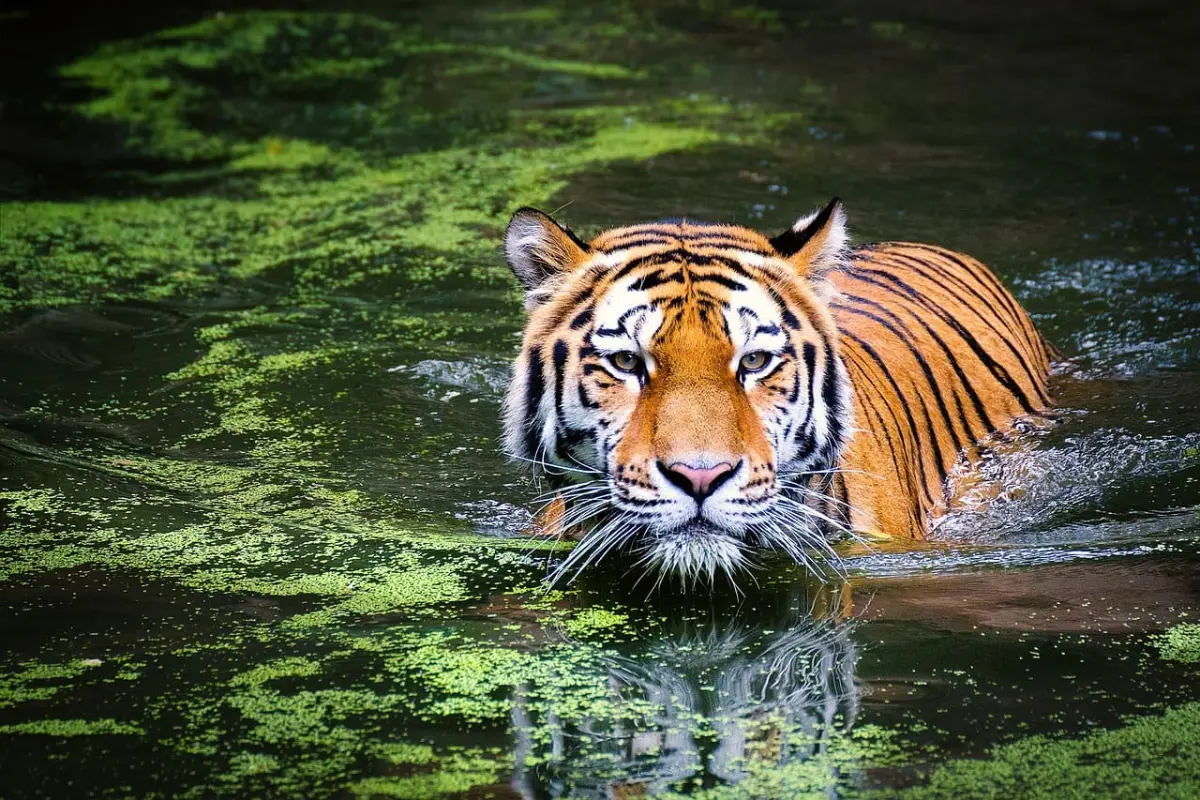
Bengal tigers and leopards, both present in good numbers but rarely visible from a safari vehicle.
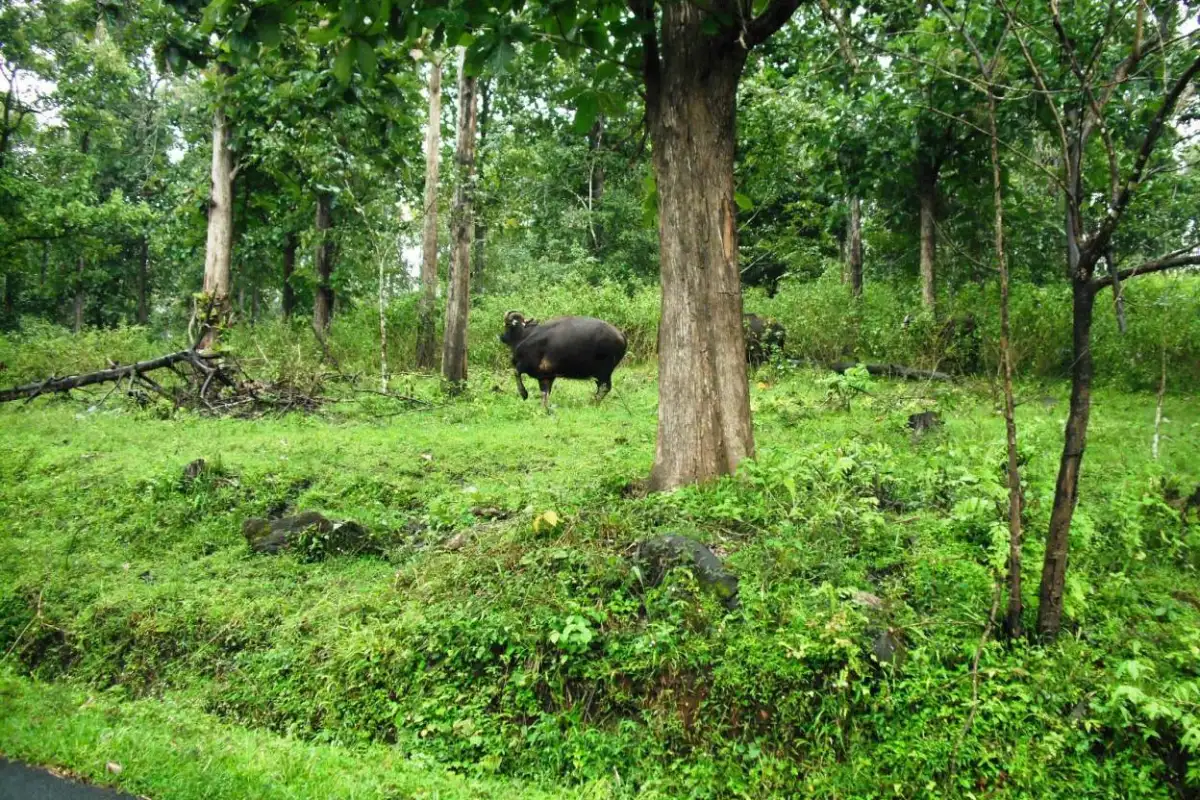
Gaur, sambar, spotted deer, barking deer and wild boar, the animals most often encountered in the clearings.
Sloth bear, dhole, Nilgiri langur, bonnet macaque, Malabar giant squirrel and smaller carnivores such as civets.
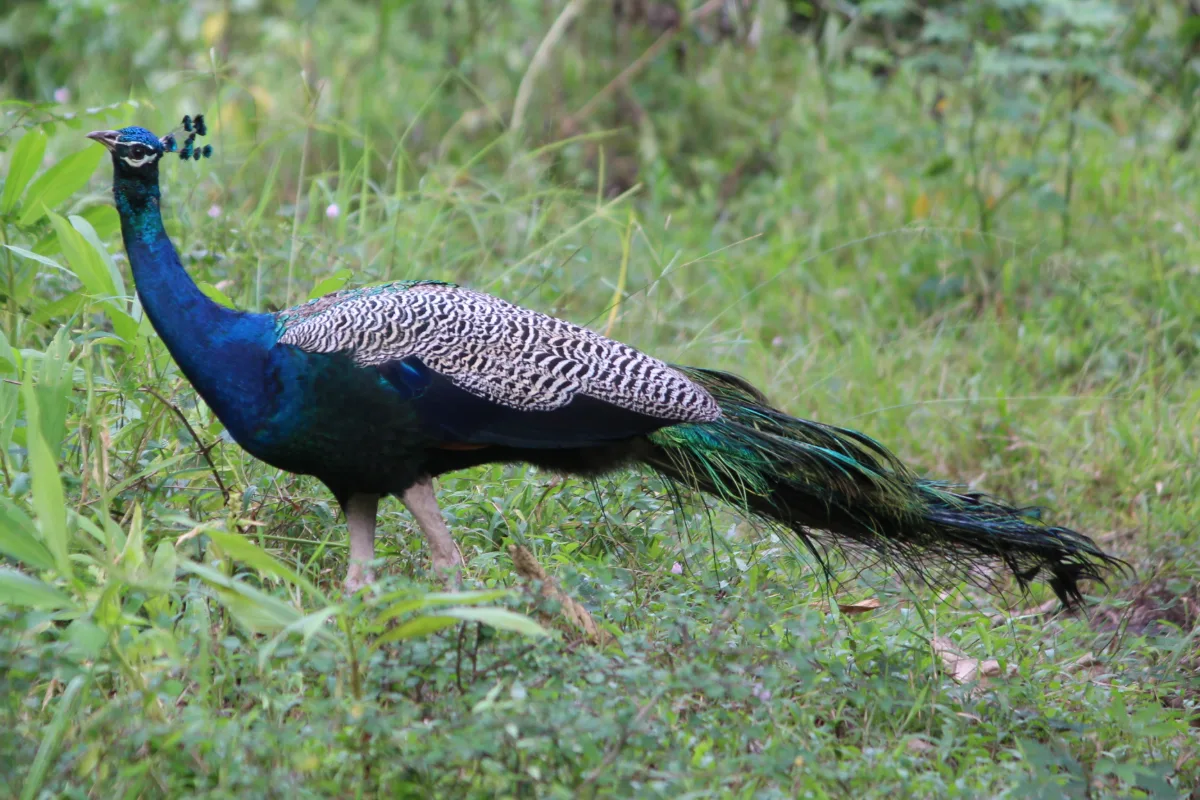
Around 203 recorded bird species, including Malabar grey hornbill, Indian peafowl, woodpeckers, rollers, drongos and several owls.
Forest department records list roughly 45 mammal species, 45 reptile species, 30 amphibian species and 59 fish species across the sanctuary. Most of these are never encountered on a tourist safari.
Tigers at Muthanga
Wayanad Wildlife Sanctuary carries the densest tiger population in Kerala. The 2022 tiger census recorded 84 tigers in the sanctuary, down from 120 in the 2018 estimate, and the National Tiger Conservation Authority put the density at about 5.3 tigers per 100 square kilometres. Density is not the same as visibility. Tigers here use dense cover, and the tourism zone is a narrow slice of a large forest, so a sighting on any single safari is unlikely.
Vultures and the diclofenac collapse
Muthanga is one of the last places in Kerala where white-rumped and red-headed vultures still nest. Surveys counted roughly 150 birds and 17 nests in February 2016, and only about 11 nests a month later. The collapse across South Asia is attributed to diclofenac, a veterinary painkiller that proved fatal to vultures feeding on treated livestock carcasses and has since been banned for that use.
Safari at Muthanga: Timings, Fees and Booking
How the safari works
Entry to Muthanga is possible only on a forest department safari. Private vehicles are not allowed past the check post and there is no walking access into the tourism zone. Each vehicle carries a driver and a departmental guide, follows a fixed track and returns to the entrance at the end of the slot. Kerala Tourism describes the jeep programme as roughly a two-hour drive, though time on the ground varies with the route allotted and the number of vehicles running.
Jeep or bus
Jeeps are hired at the entrance and suit small groups who want their own vehicle. Seating faces inward under a closed canopy, so viewing is through the side openings and the ride over the forest track is a rough one. The department also runs buses along the same trails, which cost less per head, seat many more people and are the practical option once the jeep quota sells out. Neither vehicle may leave the marked route.
Timings and vehicle limits
| Slot | Timing | Jeeps permitted |
|---|---|---|
| Morning safari | 07:00 to 10:00 | 40 |
| Evening safari | 15:00 to 17:00 | 20 |
These are the department's stated vehicle limits. Numbers are cut back on quiet days and whenever conditions inside the forest do not allow a full run.
Entry fees
| Category | Entry fee |
|---|---|
| Adult (Indian) | Rs 110 |
| Child | Rs 40 |
| Student with valid identification | Rs 40 |
| Foreign visitor | Rs 300 |
| Jeep hire | Charged separately at the entrance |
These are the figures published by Kerala Tourism for the Muthanga jeep safari. The forest department revises rates from time to time and camera charges may apply, so confirm the current amount at the counter or with the Wildlife Warden's office at Sulthan Bathery before travelling.
Booking and arrival
Tickets are sold at the forest office counter on a first-come, first-served basis, and the counter opens shortly before each slot. In peak season the morning quota can be exhausted within the first half hour, so arriving 30 to 60 minutes early matters. Vehicles leave in sequence rather than together. The first few of the morning generally get the quietest forest, while in the evening the later departures tend to coincide with more animal movement.
Best Time to Visit Muthanga Wildlife Sanctuary
October to February is the strongest window at Muthanga. The rain has stopped, tracks are firm, mornings are cool and the undergrowth has thinned enough to see some distance into the forest. This is also the busiest stretch of the year, so slots fill early.
| Period | Conditions | What to expect |
|---|---|---|
| October to February | Cool and dry, comfortable mornings | Best overall conditions and visibility, highest visitor numbers |
| March to May | Hot and dry, water sources shrinking | Animals concentrate near waterholes, but heat and haze make the drive demanding |
| June to September | Southwest monsoon, heavy rain | Tracks turn to slush, visibility drops sharply, safaris are often disrupted |
Published sources disagree on whether Muthanga closes for part of the year, and the department also suspends safaris at short notice for fire risk, track conditions or wildlife management. Confirm the sanctuary is open with the Wildlife Warden's office at Sulthan Bathery before building travel plans around a safari.
Image Gallery
Things to See and Do at Muthanga
The safari is the main draw, but the Muthanga range holds a few things worth building an extra hour around.
The elephant camp inside the range, the only departmental elephant training facility in Kerala, where kumki elephants are prepared for capture and drive operations. Visitor access is at the department's discretion and is not included with a safari ticket.
Birdwatching along the tourism zone, which is productive from the vehicle itself. Binoculars are worth more than a long lens for anyone more interested in identification than photographs.
Wildlife photography from the safari vehicle. A stabilised zoom around 100-400 mm and good high ISO performance matter more than reach alone, because light under canopy at 07:00 is poor.
The medicinal plant garden and the birth star plant collection near the entrance area, both small but useful for understanding what grows in this forest type.
The guides themselves, who come from communities living around the forest and carry field knowledge no signboard covers.
Visitor Guidelines Inside the Sanctuary
Muthanga is a working protected area, not a park laid out for visitors. The rules below are partly enforced at the gate and partly a matter of not degrading the experience for everyone else in the vehicle.
Collect the entry permit at the forest office before the check post. Vehicles are not allowed through without one.
Wear muted colours. Olive, brown, grey and khaki blend in, while bright red, orange, yellow and fluorescent shades are visible from a distance and push animals off the track.
Skip strong perfume, scented sunscreen and heavily fragranced hair products. Sharp smells carry and can unsettle animals near the route.
Keep noise down and brief children before the safari. A single shout can end sightings for every vehicle in the vicinity.
Stay seated inside the vehicle for the whole drive. Getting out, standing up or leaning out of the canopy is not permitted.
Leave pets behind. Animals are not allowed on the sanctuary grounds and cannot be left in a vehicle parked at the entrance.
Carry insect repellent and cover exposed skin. Mosquitoes and leeches are common, particularly after rain.
Carry water in a metal or reusable bottle. The tourism zone is a plastic-free area and there are no shops or water points inside.
Nothing should be left behind inside the forest, including food waste and fruit peel. Feeding any animal from the vehicle is prohibited.
Planning Notes
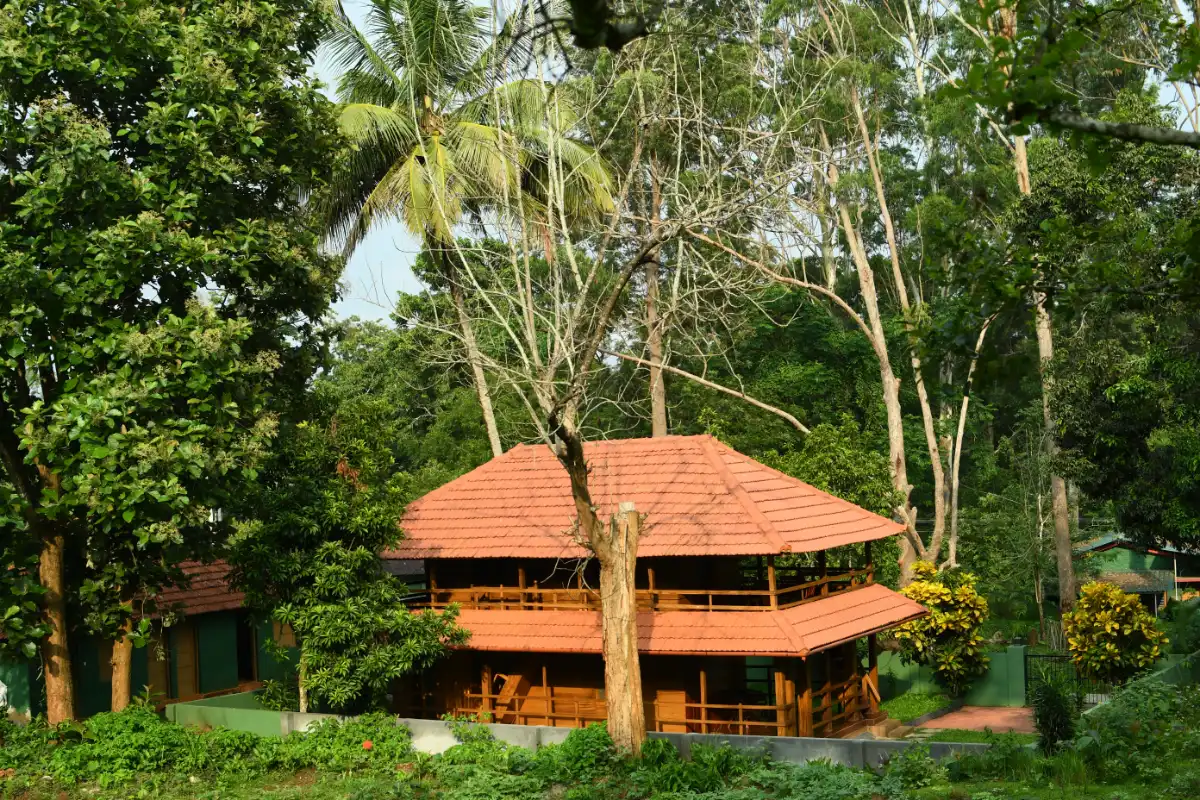
Sulthan Bathery is the practical base for Muthanga and has the largest cluster of accommodation and food options near the sanctuary.
Book the morning slot if the trip allows only one safari, and be at the counter well before it opens.
Two safaris spread across two days give a far better chance of a good sighting than a single drive.
Treat tiger and leopard sightings as luck. Plan around elephants, gaur, deer and birds, all of which are reliable.
Confirm timings, fees and whether the sanctuary is open with the Wildlife Warden's office at Sulthan Bathery before fixing dates.
Muthanga rewards visitors who arrive early and keep expectations proportionate to a two-hour drive through a narrow tourism zone. On those terms it is among the most reliable places in Kerala to see wild elephants and gaur in open country, and one of the few where the surrounding landscape still works as a continuous corridor across three states.
Nearby Hotels/Resorts
Nearby Attractions
Frequently Asked Questions
Reviews
No reviews yet!
Recent Stories
Tech Travel
Pookode Lake, Wayanad: Timings, Entry Fee, Boating and Visitor Guide
29 August 2026 Travel
Banasura Sagar Dam, Wayanad: A Complete Travel Guide
29 August 2026 Travel
Soochipara Waterfalls, Wayanad
29 August 2026 Travel
Edakkal Caves | Wayanad, Kerala
29 August 2026 Travel